
A business represents an organized entity that participates in commercial, industrial, or professional activities, focusing on generating profit through the production or sale of goods and services. When exploring business ideas, entrepreneurs must understand these fundamental operations that drive success across all industries.
Core Business Functions That Drive Success
Production and Operations Excellence
Successful business ideas center around creating tangible products or delivering valuable services. This includes manufacturing processes, software development, food preparation, and service delivery systems that meet market demands.
Strategic Marketing and Sales
The best business ideas identify specific target markets and develop compelling promotional strategies. This function transforms products and services into profitable exchanges through effective customer acquisition and retention methods.
Financial Management and Accounting
Sound financial practices separate thriving businesses from failures. This includes transaction recording, budget planning, cash flow management, and maintaining overall financial health across all business ideas.
Human Resource Development
Building strong teams through strategic recruitment, comprehensive training, and effective workforce management creates the foundation for sustainable business ideas.
Best Business Ideas Categorized by Investment Requirements
Investment requirements vary significantly based on location, operational scale, property acquisition versus rental, and industry-specific technological demands. The following categorization provides entrepreneurs with realistic expectations for different business ideas.
High-Investment Business Ideas: Premium Opportunities
Manufacturing and Industrial Ventures
Large-scale manufacturing represents some of the most capital-intensive business ideas available. Automobile production, textile manufacturing, and heavy machinery creation require substantial land acquisition, sophisticated equipment, and extensive workforce development.
Real Estate Development Projects
Commercial real estate development ranks among the best business ideas for investors with significant capital. These ventures involve land acquisition and construction of office complexes, shopping centers, and residential high-rises.
Hospitality and Tourism Enterprises
Major hotel chains and resort developments offer lucrative business ideas for substantial investors. These ventures demand significant investments in prime locations, construction, luxury furnishings, and comprehensive staff training programs.
Technology Infrastructure Businesses
Telecommunications companies represent cutting-edge business ideas requiring massive capital investments. Fiber optic installation, cellular tower construction, and satellite deployment create essential infrastructure while generating substantial returns.
Transportation and Logistics Operations
Commercial aviation and shipping companies offer scalable business ideas for major investors. Aircraft acquisition, vessel purchases, and complex logistics network establishment require substantial initial investments but offer global market access.
Medium-Investment Business Ideas: Balanced Opportunities
Retail and Consumer Services
Mid-sized retail operations represent practical business ideas for moderate investors. Boutique stores and specialty grocery businesses require commercial space leasing, inventory management, point-of-sale systems, and dedicated staff.
Food Service Establishments
Restaurant and cafe ventures remain among the best business ideas for entrepreneurs seeking community-based businesses. These require kitchen equipment, dining space development, regulatory compliance, and initial inventory investments.
Healthcare Service Providers
Specialized medical clinics and dental practices offer rewarding business ideas for qualified professionals. Medical equipment acquisition, facility preparation, and professional licensing create moderate investment requirements with strong income potential.
Fitness and Wellness Centers
Fitness studios and wellness centers represent growing business ideas in health-conscious markets. Space leasing, equipment purchasing, and professional certification create manageable investment requirements with recurring revenue potential.
Automotive Service Businesses
Auto repair shops offer practical business ideas for mechanically skilled entrepreneurs. Garage space acquisition, diagnostic equipment, and specialized tools create moderate startup costs with consistent customer demand.
Low-Investment Business Ideas: Accessible Opportunities
Digital Service Providers
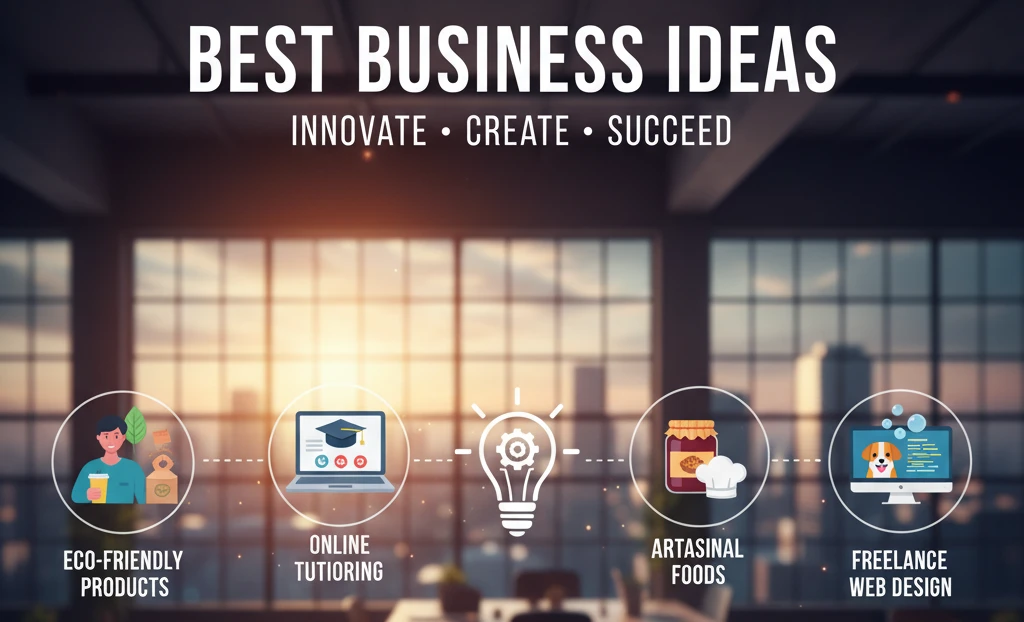
Freelance services represent the most accessible business ideas for skilled professionals. Writing, graphic design, and web development require minimal equipment investments while offering unlimited scaling potential through digital platforms.
Educational and Coaching Services
Online tutoring and coaching rank among the best business ideas for knowledge workers. Computer equipment, internet connectivity, and subject expertise create minimal barriers to entry with global market reach.
E-commerce and Digital Retail
Dropshipping businesses offer innovative business ideas without inventory requirements. Website development, e-commerce platform subscriptions, and digital marketing create low-cost entry points into retail markets.
Virtual Administrative Services
Virtual assistant and social media management services represent scalable business ideas for administrative professionals. Basic computer equipment and communication tools enable immediate business launch with minimal investment.
Home-Based Food Services
Catering and meal delivery services offer practical business ideas for culinary entrepreneurs. Specialized cooking equipment and ingredient sourcing create manageable startup costs with local market focus.
Pet Care Services
Pet sitting and dog walking represent simple business ideas with minimal startup requirements. Basic insurance, equipment, and local marketing create immediate income opportunities in growing markets.
Content Creation Businesses
Blogging, vlogging, and digital content creation offer creative business ideas for modern entrepreneurs. Camera equipment, editing software, and hosting services create low-cost entry into potentially lucrative digital markets.
Different ways a new business can secure its initial funding
A new business can secure its initial funding (capital) through a variety of sources, which are generally categorized into three main types: Equity Financing, Debt Financing, and Self-Funding (Bootstrapping). The best option depends on the business’s stage, growth potential, and the founder’s willingness to give up ownership.
Equity Financing
Equity financing involves selling a percentage of ownership (shares) in the company in exchange for capital. The money does not need to be repaid, but the founder gives up a level of control and future profits.
-
1. Bootstrapping/Self-Funding:
-
What it is: The founders use their personal savings, credit cards, retirement funds (with caution), or initial revenue to fund the business.
-
Pros: The founder retains 100% ownership and control (no dilution). It forces strong financial discipline.
-
Cons: Limits the capital available, exposing the founder to significant personal financial risk.
-
-
2. Friends, Family, and Fools (FFF):
-
What it is: Capital raised from the founder’s personal network.
-
Pros: Often involves favorable terms (patient capital), no complicated legal negotiations, and fast access to funds.
-
Cons: Can create personal strain if the business fails.
-
-
3. Angel Investors:
-
What it is: Wealthy individuals (often experienced entrepreneurs) who invest their own money in early-stage startups in exchange for equity.
-
Pros: They provide capital and mentorship/expertise along with access to their professional network.
-
Cons: They take a stake in the company and may expect a high return, often having a say in high-level decisions.
-
-
4. Venture Capital (VC) Firms:
-
What it is: Firms that manage investment funds from various sources and invest large sums in startups with high growth potential in exchange for significant equity.
-
Pros: Provides large amounts of capital for rapid scaling and offers strategic guidance.
-
Cons: Founders give up a substantial ownership stake and control; VCs typically demand a seat on the board and expect a fast, high-return exit (like an IPO or acquisition).
-
Debt Financing
Debt financing involves borrowing a fixed sum of money that must be repaid over a set period, usually with interest. Unlike equity, debt does not require giving up ownership, but it creates a repayment obligation.
-
1. Small Business Loans (Bank Loans):
-
What it is: Traditional term loans or lines of credit from banks or credit unions. These often require a solid business plan, collateral (an asset pledged as security), and a strong credit history (personal and/or business).
-
Pros: No equity dilution; interest payments may be tax-deductible.
-
Cons: Difficult for very new businesses with no operating history or collateral.
-
-
2. Government-Guaranteed Loans (e.g., SBA Loans in the U.S.):
-
What it is: Loans offered by traditional lenders but partially guaranteed by a government agency. This reduces the risk for the lender, making them more willing to approve loans for small businesses.
-
Pros: More favorable terms, lower interest rates, and longer repayment periods than many commercial loans.
-
Cons: The application process can be lengthy and complex.
-
-
3. Microloans:
-
What it is: Small loans (usually less than $\$50,000$) provided by non-profit organizations or community-based lenders, often aimed at underserved entrepreneurs.
-
Pros: Easier to qualify for than traditional bank loans; often comes with business counseling.
-
Cons: Loan amounts are small.
-
-
4. Business Credit Cards & Lines of Credit:
-
What it is: Revolving debt that allows the business to borrow money up to a certain limit, paying interest only on the amount used.
-
Pros: Flexible, quick access to working capital.
-
Cons: Can carry very high interest rates if the balance is not paid off quickly.
-
-
5. Factoring and Invoice Financing:
-
What it is: Selling a business’s accounts receivable (outstanding invoices) to a third party (a factor) at a discount for immediate cash.
-
Pros: Provides immediate cash flow without waiting for customers to pay.
-
Cons: Very expensive, as the factor takes a percentage fee of the invoice value.
-
Alternative Funding Sources
These sources blend elements of debt and equity or rely on unconventional models.
-
1. Crowdfunding:
-
What it is: Raising small amounts of money from a large number of people, typically through online platforms (Kickstarter, Indiegogo).
-
Reward-based: Investors receive a product or service (pre-order).
-
Equity-based: Investors receive a small stake in the company (requires careful legal compliance).
-
-
Pros: Validates the market need, builds a community of early adopters, and allows the founder to retain control (reward-based).
-
Cons: Requires an extensive marketing campaign, and failure to meet rewards can damage the brand.
-
-
2. Grants and Subsidies:
-
What it is: Non-dilutive funding (money that does not have to be repaid or require equity) provided by government agencies, foundations, or corporations, often targeting specific industries (e.g., tech, clean energy) or demographics.
-
Pros: Free money with no repayment or equity given up.
-
Cons: Extremely competitive, specific criteria must be met, and the application process is rigorous.
-
-
3. Incubators and Accelerators:
-
What it is: Programs that provide mentorship, office space, and networking opportunities. In exchange, they often provide a small amount of seed capital (e.g., $\$25,000 – \$200,000$) for a small equity stake.
-
Pros: Invaluable guidance and structured support to rapidly grow the business.
-
Cons: Often requires relocating, and the timeline is highly condensed.
-
Conclusion: Choosing the Right Business Ideas for Your Goals
The best business ideas align with your available capital, skills, market opportunities, and long-term objectives. Whether pursuing high-investment manufacturing ventures or low-cost digital services, success depends on thorough market research, solid business planning, and consistent execution. Consider your risk tolerance, available resources, and personal interests when selecting from these diverse business ideas to build your entrepreneurial future.